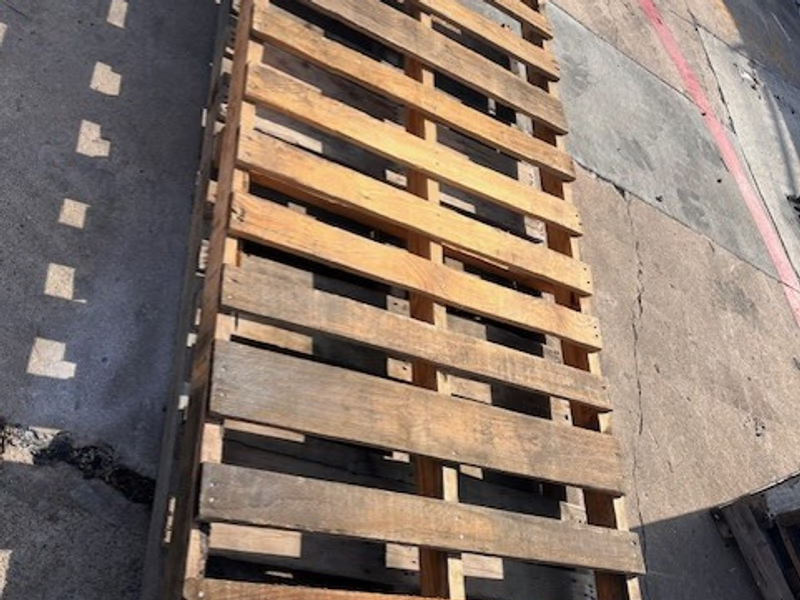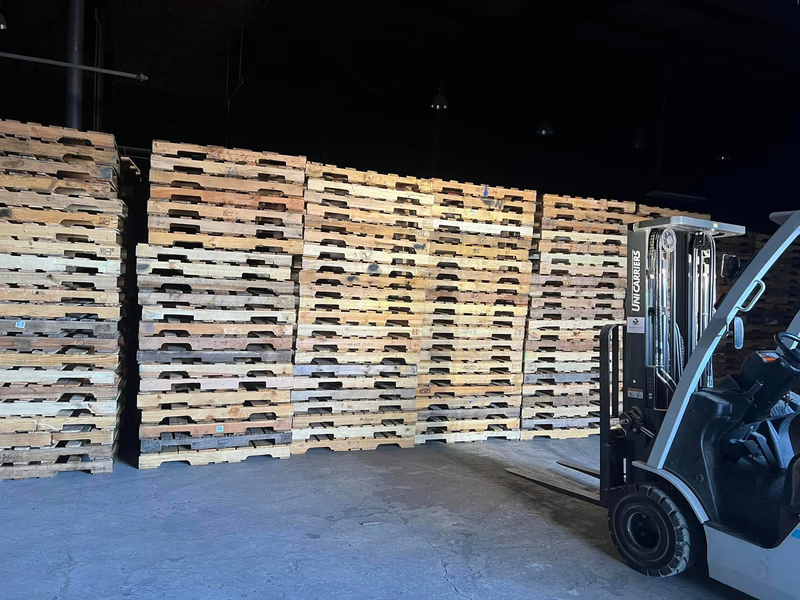
In recent years, many businesses have turned to recycled pallets as a cost-effective and sustainable alternative to new pallets. However, major retailers like Walmart have implemented stringent pallet standards, making it increasingly difficult for companies to use recycled pallets without facing penalties. Failure to comply with these standards can lead to significant fees, rejected shipments, and logistical headaches.
Walmart's Strict Pallet Guidelines
Walmart enforces detailed specifications for pallets used in its distribution centers (DCs). Their requirements ensure that pallets can safely support loads, allow smooth handling with forklifts, and meet durability standards. Key specifications include:
- Standard Pallet Size: 48" x 40" (odd-sized pallets are not allowed for grocery shipments)
- Minimum Material Standards: Must be Grade A, made of sound wood, free of knots, and have a minimum of three stringers
- Weight Capacity: A Grade A pallet must not exceed 2,100 lbs, while a block pallet can handle up to 2,800 lbs
- Board and Stringer Thickness: Specific tolerances for board thickness and stringer size must be met to ensure durability
- Palletized Shipments: Any case over 120 lbs must be palletized to meet Walmart's shipping requirements
Additionally, Walmart prohibits pallets that have been contaminated or previously used to ship different types of products, further complicating the use of recycled pallets.
Walmart's Grade A Pallet Guidelines in 2025
Minimum Grade A Stringer Pallet Standards
Size Requirement:
- Full pallet: 48" x 40" with a tolerance of +/- 0.25"
- Partial four-way entry
Condition Requirements:
- Pallet must be Grade A, 4-way, flush, and non-reversible
- Must accommodate standard pallet jacks and forklifts with adequate top deck spacing
Structural Specifications:
- Minimum spacing between deck boards: 4 inches
- Must be made of sound material, free of knots
- Must have at least 7 top boards and 5 bottom boards
- Minimum board thickness: 5/8" x 3.5" W, with a tolerance of +/- 1/8"
- Must have at least 3 stringers
- Minimum stringer size: 1.25" W x 3.5" H, with a tolerance of +/- 1/8"
Oversized Pallets:
- Allowed only if the packaging does not fit within the standard 48" x 40" pallet
- Overhang is not permitted
Odd-Sized Pallets:
- Not allowed for Grocery Network shipments
- Products must ship on a standard 48" x 40" full pallet
Weight and Load Requirements
Maximum weight limits:
- Grade A pallet: 2,100 lbs
- Block pallet: 2,800 lbs
General Requirements:
- Staple stock items must be palletized
- Pallets contaminated by non-Walmart shipments or prior contamination are NOT ALLOWED
- Walmart charges fees or chargebacks for non-compliant pallets
Alternative Pallet Materials
- Walmart allows alternative materials such as plastic and metal
- Approval may require proof of:
- Structural capability
- Fire rating
- All standard pallets must be rackable
- Corrugated pallets are NOT accepted for shipments into Walmart DCs
- Non-standard or alternative pallets must be approved by the Walmart Inbound Quality Senior Manager
Wood Packaging Materials (WPM)
All wood packaging must comply with ISPM 15 (International Standards for Phytosanitary Measures).
Regulated wood packaging must be treated using:
- Heat treatment
- Methyl bromide fumigation
Banned Chemicals:
- 2,4,6-tribromophenol (TBP) is banned in:
- United States
- Europe
- Canada
- TBP is not EPA-approved and cannot be sold or used in the U.S.
- TBP is not recognized by the American Wood Preservative Association (AWPA)
Other Key Notes
- If a product is too large to fit on a standard 48" x 40" pallet, it may be allowed to extend over one dimension only (either width or length)
- All shipments over 120 lbs must be palletized
- Walmart expects pallets to support the weight of the product without failure
For updated info refer to Walmart's supplier guidelines
The Problem with Recycled Pallets
Recycled pallets, while cost-effective and environmentally friendly, often struggle to meet these strict specifications. Many recycled pallets come from mixed sources, meaning they may not meet the required size, strength, or cleanliness standards. This leads to several key issues:
Structural Integrity Concerns
- Recycled pallets may have missing or weak boards, making them prone to breakage during transit
- Some have excessive wear that reduces their load-bearing capacity
Non-Standard Dimensions
- Some recycled pallets have slight variations in size, preventing them from fitting Walmart's automated warehouse systems
- Pallets with overhang are not accepted, meaning businesses must carefully inspect and select pallets that meet precise specifications
Contamination Risks
- If a recycled pallet was previously used to ship products not approved by Walmart, it could be rejected
- Cross-contamination from chemicals, food products, or hazardous materials can lead to shipment refusal
Financial Consequences of Non-Compliance
Walmart imposes fees and chargebacks on businesses that fail to meet pallet standards. If a pallet does not meet specifications, Walmart can:
- Reject the Shipment: Resulting in additional shipping costs and delays
- Charge Penalty Fees: Companies may face fines per non-compliant pallet
- Impose Restocking Fees: If Walmart must repalletize the shipment, businesses will be billed for the labor and materials
These penalties can add up quickly, cutting into profits and disrupting supply chain efficiency.
How to Avoid Fees and Compliance Issues
Businesses looking to use recycled pallets while shipping to Walmart must take extra precautions:
- Source from Reputable Suppliers: Work with pallet recyclers who can guarantee Grade A, 48" x 40" pallets that meet Walmart's standards
- Inspect Pallets Before Use: Check for missing boards, cracks, improper sizing, and contamination risks
- Invest in Pallet Sorting and Repair: If using recycled pallets, ensure they are properly repaired and inspected before use
- Consider New Pallets: When in doubt, avoid the risks and buy new pallets
Conclusion
While recycled pallets offer cost and sustainability benefits, Walmart's strict pallet guidelines make compliance a challenge. Businesses must carefully inspect and source pallets to avoid costly penalties and shipment rejections. By understanding and adhering to Walmart's pallet standards, companies can maintain smooth logistics operations and avoid unnecessary expenses.